20
Oct
7

The Verve’s Bittersweet Symphony sounds like the Rolling Stones’ “The Last Time”

Okay, so this is an example of the fine line between using a sample and ripping off another artist. Here’s the story from Wikipedia:

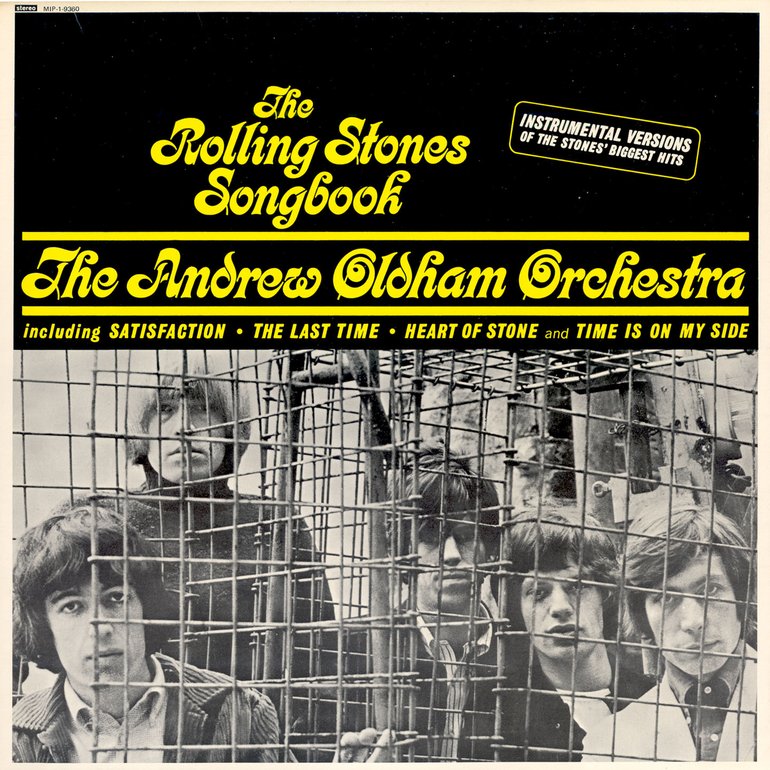
“Although the song’s lyrics were written by Verve vocalist Richard Ashcroft, it has been credited to Keith Richards and Mick Jagger after charges by the original copyright owners that the song was plagiarized from the Andrew Oldham Orchestra recording of The Rolling Stones’ 1965 song “The Last Time”.

Originally, The Verve had negotiated a licence to use a sample from the Oldham recording, but it was successfully argued that the Verve had used ‘too much’ of the sample.[5] Despite having original lyrics, the music of “Bitter Sweet Symphony” is partially based on the Oldham track (the song uses the sample as its foundation and builds layers upon it, though the prominent violin melody is Ashcroft’s creation),[citation needed] which led to a lawsuit with ABKCO Records, Allen Klein’s company that owns the rights to the Rolling Stones material of the 1960s. The matter was eventually settled, with copyright of the song reverting to ABKCO and songwriting credits to Jagger and Richards.

After losing the composer credits to the song, Richard Ashcroft commented, “This is the best song Jagger and Richards have written in 20 years.”[7]“

Oldham Orchestra “The Last Time” (’66)

sounds like bittersweet symphony

Audio clip: Adobe Flash Player (version 9 or above) is required to play this audio clip. Download the latest version here. You also need to have JavaScript enabled in your browser.

The Verve: Bittersweet Symphony (’97)

sounds like rolling stones

Audio clip: Adobe Flash Player (version 9 or above) is required to play this audio clip. Download the latest version here. You also need to have JavaScript enabled in your browser.


What do you think about this one? Although Ashcroft stakes claim to “Bittersweet Symponhy’s” catchy string melody, I find it highly derivative of the bells in the Oldham version of “The Last Time”

More sound-alikes:
Flaming Lip’s “Fight Test” sounds like Cat Steven’s “Father and Son”
Walt Disney’s “Spoonful of Sugar” sounds like John William’s “Imperial March”

7 Comments:
  1. vrizo 21 Oct, 2009

    If you sync up the two videos just right, they work well together. Which means to say, they do sound just alike. Good find! We have that Stones album on vinyl. :D

  2. Mari 7 Nov, 2009

    ewww… i had no idea they didn’t come up with that song! that’s not even funny how one and the same they are.

  3. Sam 19 Mar, 2011

    ewww…The Stones didn’t even write the melody that was sampled in “Bittersweet Symphony” and “The Last Time” is a rip-off of an old gospel song called “This Could be the Last Time”! That’s not even funny how ol’ Keef and Mick are getting money from a song that sampled a completely original interpretation of a song that they stole in the first place!

    God forbid an artist like the Verve get creative with a short string melody, write some amazing lyrics and a great vocal melody to it and end up creating one of the best pop songs of the 90s. At least one person was able to make that terrible song interesting and catchy.

  4. Nick 16 Aug, 2011

    The Stones wrote a completely new song with that one line from the Staple Singers “This may be the last time”, the words in the refrain (not the music) as the main lyrical hook. The musical hook is the riff written and played by Brian Jones. Today Jones would have been credited but not the Staple Singers. The Verve sampled and copied and recorded the orchestral version of the Last time, released in 1966(?). The copied it note for note, changed the instrumentation on some parts.

  5. Kari 20 Oct, 2011

    jason derulo has the same beat for one of his songs, riding solo

  6. Minsky 8 Feb, 2012

    Nick – Having studied this closely (I am a Music Supervisor for Film and TV and have been involved in Music Publishing) I just want to point out that the legal case against The Verve came about due to ‘overuse of samples.’ That is to say that The Verve made a legal approach for a sample, paid for it and used it. Agreed use was 5 notes and the end result was successfully argued as being 7. The time taken in court to successfully argue this gives some indication as to the “grey area” that this case inhabits in British law.

    Andrew Oldham settled out of court whilst Alan Klein (who was savvy enough to take an ‘pecuniary’ – that is… economic – interest in ALL of the Rolling Stones’ songs during the 1960′s) originally agreed a 50/50 split of royalties. Having seen the song steadily gain in popularity (due in part to the hard work of the Virgin Records Group) he rescinded that “offer” and announced that he’d take 100%.

    The track was not ‘copied note for note’ – that would be ridiculous and no band setting out to take a whole song in that way would bother to secure rights for a sample of part of it.

    This case unfortunately demonstrates how Copyright law is often enacted, not to support or incentivise artistic production (to benefit the artist), but instead to further economic concerns and interests of plutocrats. This is not good for society.

    Nobody would want to see work stolen from an author and yet the irony is that The Verve fell foul (stupidly) of Copyright infringement and paid a hefty price – they lost their work almost in its entirety (they held some moral rights). This makes it increasingly difficult for artists to be influenced and rekindle past works for creative purposes. It also denies a society access to its heritage.

  7. [...] o valor artístico da copia sexa evidente e supere o valor do copiado. Por iso nos podemos sentir do lado dos The Verve antes ca dos Rolling Stone e gozamos cos fusilamentos en masa de Quentin Tarantino, gran reciclador de lixo cinematográfico. [...]

Post your comment